Shoulder Joint Replacement in San Antonio, TX
Dr. Brown, is a board-certified, fellowship-trained orthopaedic surgeon specializing in sports medicine and the surgical care of the shoulder and knee. Her San Antonio practice offers shoulder arthroplasty, including surgical treatment for appropriate patients with painful shoulder conditions. Shoulder replacement involves removing damaged portions of the shoulder joint and replacing them with artificial components. The appropriate type of shoulder replacement depends on factors such as the condition of the joint, the rotator cuff, the patient's symptoms, imaging findings, activity level, and overall health. A comprehensive evaluation can help determine whether shoulder replacement or another treatment approach is appropriate.
What is Shoulder Joint Replacement?
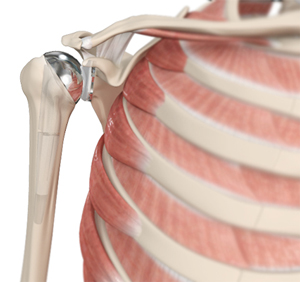
Total shoulder replacement surgery is performed to relieve symptoms of severe shoulder pain and disability due to arthritis. In this surgery, the damaged articulating parts of the shoulder joint are removed and replaced with artificial prostheses. Replacement of both the humeral head and the socket is called a total shoulder replacement.
What is Shoulder Anatomy?
The shoulder is a highly movable body joint that allows various movements of the arm. It is a ball and socket joint, where the head of the humerus (upper arm bone) articulates with the socket of the scapula (shoulder blade), which is called the glenoid. The two articulating surfaces of the bones are covered with cartilage, which prevents friction between the moving bones. The cartilage is lubricated by synovial fluid. Tendons and ligaments around the shoulder joint provide strength and stability to the joint.
What is Arthritis?
When the cartilage is damaged, the two bones rub against each other causing pain, swelling and stiffness of the joint. This condition is called arthritis. There are many types of arthritis. Osteoarthritis (wear-and-tear brought about by old age) and rheumatoid arthritis (autoimmune disease) are two forms of arthritis.
What are the Indications for Shoulder Joint Replacement?
Total shoulder joint replacement is a surgery indicated for conditions such as osteoarthritis or rheumatoid arthritis when medication, injections, physical therapy, and activity changes do not help relieve pain. Your doctor recommends surgery when you have the following symptoms:
- Severe shoulder pain that restricts daily activities
- Moderate to severe pain during rest
- Weakness and/or loss of motion
What Does Preparation for Shoulder Joint Replacement Involve?
To decide whether total shoulder replacement is a good option for you, your doctor will evaluate your condition thoroughly.
Your doctor will review your medical history and perform a physical examination of your shoulder to assess the extent of mobility and pain. Imaging tests such as X-ray or MRI (magnetic resonance imaging) may also be performed.
What is the Procedure for Shoulder Joint Replacement?
The surgery is performed under regional or general anesthesia. An incision is made over the affected shoulder and the underlying muscles are separated to expose the shoulder joint. The surgery may be performed as an open surgery, where a large incision is made, or minimally invasive, where small incisions are made to insert specialized surgical tools.
The upper arm bone (humerus) is separated from the glenoid socket of the shoulder bone. The arthritic or damaged humeral head is cut and the humerus bone is hollowed out and filled with cement. A metal ball with a stem is gently press-fit into the humerus.
Next, the arthritic part of the socket is prepared. The plastic glenoid component is fixed in the shoulder bone.
After the artificial components are implanted, the joint capsule is stitched, and the wound is closed.
What Does Postoperative Care for Shoulder Joint Replacement Involve?
After the surgery, medications and antibiotics are prescribed to control pain and prevent infection. Your arm may be secured in a sling or cast. The rehabilitation program includes physical therapy, which is started soon after the surgery and is very important to strengthen and provide mobility to the shoulder. You may be able to perform gentle daily activities two to six weeks after surgery.
What are the Risks and Complications of Shoulder Joint Replacement?
As with any major surgery, there may be potential risks involved:
- Anesthetic complications such as nausea, dizziness, and vomiting
- Infection of the wound
- Dislocation, requiring repeat surgery
- Damage to blood vessels, nerves or muscles
- Failure to relieve pain
- Pulmonary embolism
- Wear and tear of the prosthesis
Why Choose Dr. Leah Brown for Shoulder Joint Replacement in San Antonio?
- Board-certified and fellowship-trained: Dr. Brown is a board-certified orthopaedic surgeon with fellowship training in orthopaedic sports medicine shoulder
- Specialized shoulder care: Her practice focuses on the diagnosis and treatment of shoulder conditions, including shoulder instability, rotator cuff problems, shoulder arthroscopy, shoulder reconstruction, and shoulder arthroplasty.
- Individualized treatment planning: Shoulder replacement is not appropriate for every patient with shoulder pain. Dr. Brown evaluates the underlying condition and discusses treatment options based on each patient's symptoms, goals, and clinical findings.
- Sports medicine experience: Dr. Brown's fellowship training and sports medicine background provide experience caring for active patients with a wide range of shoulder conditions and activity goals.
- Comprehensive orthopaedic care: Patients can receive evaluation and treatment for a range of shoulder conditions, allowing surgical and nonsurgical options to be considered as appropriate.
- San Antonio location: Dr. Brown provides orthopaedic and sports medicine care through UT Health San Antonio locations in the San Antonio area.
Shoulder Joint Replacement FAQs
What is shoulder joint replacement?
Shoulder joint replacement, also called shoulder arthroplasty, is a surgical procedure that replaces damaged portions of the shoulder joint with artificial components. The specific type of replacement depends on the patient's condition and the structures affected.
Who may need a shoulder replacement?
Shoulder replacement may be considered for patients with significant shoulder joint damage or arthritis who continue to experience pain and functional limitations despite appropriate nonsurgical treatment. An orthopaedic evaluation is necessary to determine whether surgery is appropriate.
What conditions can lead to shoulder replacement?
Shoulder replacement may be used to treat certain cases of severe osteoarthritis, rheumatoid arthritis, and other conditions that cause substantial damage to the shoulder joint. The underlying diagnosis and condition of the rotator cuff can influence the type of replacement considered.
What symptoms may indicate that I need a shoulder replacement?
Symptoms can include persistent or severe shoulder pain, pain that interferes with sleep or daily activities, stiffness, weakness, and significant loss of shoulder motion. These symptoms can have many causes, so an evaluation is important before considering joint replacement.
What happens before shoulder replacement surgery?
Dr. Brown will review your medical history, discuss your symptoms and activity limitations, and perform a physical examination. Imaging such as X-rays and, when appropriate, other studies can help evaluate the condition of the shoulder joint and determine suitable treatment options.
Is shoulder replacement the same as shoulder arthroscopy?
No. Shoulder arthroscopy is a minimally invasive procedure that uses a small camera and specialized instruments to diagnose or treat certain shoulder problems. Shoulder replacement involves replacing damaged joint surfaces with artificial components and is generally considered for more advanced joint damage.
How long does recovery take after shoulder replacement?
Recovery varies from patient to patient and depends on the type of shoulder replacement, overall health, surgical findings, and rehabilitation progress. Physical therapy and a gradual return to activities are important parts of recovery.
Will I need physical therapy after shoulder replacement?
Physical therapy is commonly an important part of rehabilitation following shoulder replacement. Your rehabilitation program will be individualized and may focus on restoring motion, strength, and function while protecting the healing shoulder.
When should I consider seeing a shoulder specialist in San Antonio?
Consider an orthopaedic evaluation if persistent shoulder pain, stiffness, weakness, or loss of motion is interfering with daily activities, sleep, work, or exercise, particularly when conservative treatments have not provided adequate improvement.
Where can I get shoulder joint replacement in San Antonio, TX?
Dr. Leah Brown provides specialized orthopaedic and shoulder care in San Antonio and lists shoulder arthroplasty among her services. She also provides care through UT Health San Antonio.
Schedule a Shoulder Joint Replacement Consultation in San Antonio, TX
Dr. Leah Brown, MD, provides specialized shoulder and orthopaedic care in San Antonio, including shoulder arthroplasty. An evaluation can help identify the source of your symptoms and determine whether shoulder replacement or another treatment option is appropriate for you.
Schedule a consultation with Dr. Leah Brown in San Antonio, TX, to discuss your shoulder pain, treatment options, and whether shoulder joint replacement may be appropriate for your condition.
For more information about our services or to schedule an appointment, call us at or cltextick here to request an appointment online. We’ll respond to you as soon as possible.