Request an Appointment or Give us a call
Platelet-Rich Plasma (PRP) for the Knee in San Antonio, TX
Dr. Leah Brown, MD, is a board-certified, fellowship-trained orthopaedic surgeon specializing in sports medicine and the surgical care of knee, shoulder, and elbow injuries. Her San Antonio practice offers PRP therapy as part of its regenerative medicine services, providing patients with access to non-surgical treatment options when appropriate.
PRP treatment may be considered for selected knee conditions, including certain tendon or ligament injuries, cartilage problems, and early osteoarthritis. Whether PRP is appropriate depends on the underlying diagnosis, severity of the condition, previous treatments, overall health, and individual treatment goals.
What are Orthobiologics for the Knee?
Use of orthobiologics to treat knee injuries or conditions is known as orthobiologics for the knee.
Orthobiologics are natural substances such as cells, tissue, blood components, and growth factors that are used to aid in the treatment of orthopaedic injuries or conditions. They may be used to replace lost tissue, stimulate regeneration, accelerate healing, reduce pain and inflammation, and improve joint function. They are mostly obtained from your own body or sometimes from a donor and may be administered in the form of injections or may require a surgical procedure. Orthobiologics may be used alone as conservative treatment or following orthopaedic surgery to enhance results.
When are Orthobiologics for the Knee Indicated?
Orthobiologics for the knee are indicated for the treatment of knee injuries and conditions, such as:
- Articular cartilage injuries
- Early osteoarthritis
- Ligament injuries
- Tendon injuries
Orthobiologics are usually recommended when rest, medications and physical therapy do not relieve symptoms and joint replacement surgery is not indicated.
Types of Orthobiologics
Some of the different types of orthobiologics include:
- Platelet-rich plasma (PRP): PRP is obtained from your own blood after it has been processed to concentrate platelets and certain white blood cells that enhance healing and reduce inflammation. PRP may be injected directly into the damaged tissue during an outpatient procedure or following repair surgery.
- Bone marrow aspiration concentrate (BMAC): BMAC is obtained after processing bone marrow that is removed from your pelvic bone. BMAC is rich in specialized cells, which produce proteins and growth factors necessary for healing and reducing inflammation. Specialized cells are cells that can develop into a particular type of tissue or organ. While there are various types of specialized cells, the ones located in the bone marrow are regarded as the best at promoting musculoskeletal healing.
- Adipose tissue: Adipose tissue or fat cells have remarkable healing and regenerative properties. They are typically obtained from your waist, processed to remove impurities and inflammatory components, and then injected at the site of injury.
- Amniotic products: Amniotic tissue products such as amniotic membrane and amniotic fluid can reduce inflammation and promote healing in tissues due to their cellular content and presence of hyaluronic acid. They are available as injections or patches. Many researches have indicated that amniotic products are capable of reducing pain and inflammation in joints afflicted with osteoarthritis.
- Autologous cell therapy: In this type of orthobiologic, a blood sample is extracted from a vein in your arm and a sample of bone marrow is obtained from the pelvis through a needle. Subsequently, platelets are isolated from the blood sample and specialized cells are isolated from the bone marrow sample. After preparation, these 2 components are injected into the affected knee region using advanced imaging guidance.
Procedure Involved with Orthobiologics for the Knee
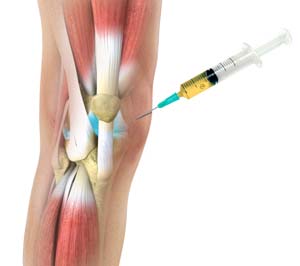
Administration of orthobiologics for the knee is typically performed through an injection of the orthobiologics into the knee. During the procedure, you will be seated or will lie on your back with the affected knee flexed or extended. The skin over the injection site is sterilized and numbed with a local anesthetic. The injection containing the orthobiologics is inserted into the affected knee. In some cases, ultrasound imaging is used to help guide the needle to the correct site.
Postoperative care
Postoperative care will include the following instructions:
- Avoid strenuous activities for a couple of days.
- Apply ice on the injection site for comfort.
- Rest, elevation, and medicines are recommended to relieve pain and swelling.
- Gentle range of motion exercises is recommended.
Risks and Complications
Orthobiologics for the knee is a relatively safe procedure; however, as with any procedure, there may be some complications, such as:
- Infection
- Nerve damage
- Swelling
- Blood clots
Why Choose Dr. Leah Brown for PRP Knee Treatment in San Antonio?
- Board-certified, fellowship-trained orthopaedic surgeon: Dr. Brown has specialized training in orthopaedic sports medicine and focuses on knee, shoulder, and elbow care.
- Specialized knee and sports medicine care: Her clinical focus includes knee disorders, sports injuries, and tendon and ligament injuries.
- Regenerative medicine options: PRP therapy is included among the regenerative medicine services offered through Dr. Brown's practice.
- Individualized treatment planning: PRP is not appropriate for every knee condition. A thorough evaluation can help determine whether an injection-based treatment or another approach is more suitable.
- Care for athletes and active adults: Dr. Brown's sports medicine background includes caring for patients with a range of activity levels and sports-related orthopaedic concerns.
- Convenient San Antonio care: Dr. Brown provides orthopaedic and sports medicine care through UT Health San Antonio locations in the San Antonio area.
Platelet-Rich Plasma (PRP) for the Knee FAQs
What is PRP therapy for the knee?
Platelet-rich plasma (PRP) therapy uses a concentrated preparation made from a patient's own blood. The preparation is injected into or around the affected area when PRP is considered appropriate for the condition being treated.
What knee conditions may be treated with PRP?
PRP may be considered for selected knee conditions, including certain tendon and ligament injuries, cartilage-related problems, and some cases of early osteoarthritis. A medical evaluation is necessary to determine whether PRP is appropriate.
Is PRP for the knee a surgical procedure?
PRP treatment is generally performed as an injection rather than as surgery. Depending on the treatment area and clinical circumstances, imaging guidance may be used to help accurately place the injection.
Is PRP appropriate for everyone with knee pain?
No. Knee pain can have many causes, and PRP is not appropriate for every diagnosis. Treatment recommendations depend on the source and severity of pain, examination findings, imaging when necessary, previous treatments, and individual goals.
Can PRP replace knee surgery?
PRP should not be viewed as a replacement for every type of knee surgery. Some injuries or advanced joint conditions may require surgical treatment or other interventions. Dr. Brown can evaluate the knee and discuss appropriate treatment options.
How long does it take to recover after a PRP knee injection?
Recovery varies depending on the condition being treated and the individual. Patients may be advised to temporarily modify strenuous activities and gradually resume movement and exercise according to their treatment plan.
When should I see an orthopaedic specialist for knee pain?
Consider an orthopaedic evaluation if knee pain persists despite rest or activity modification, interferes with walking or exercise, or is accompanied by swelling, instability, locking, or symptoms following an injury.
Where can I get PRP treatment for my knee in San Antonio, TX?
Dr. Leah Brown provides sports medicine and orthopaedic care in San Antonio, including knee care and PRP therapy through her regenerative medicine services.
Schedule a PRP Knee Consultation in San Antonio, TX
Dr. Leah Brown, MD, provides specialized sports medicine and orthopaedic care for knee conditions in San Antonio. During an evaluation, she can assess your symptoms and diagnosis and determine whether PRP or another treatment approach may be appropriate for your needs.
Contact Dr. Leah Brown, MD, to schedule a consultation for PRP knee treatment in San Antonio, TX, and learn more about your treatment options.
For more information about our services or to schedule an appointment, call us at or cltextick here to request an appointment online. We’ll respond to you as soon as possible.