
Knee Ligament Reconstruction in San Antonio, TX
Knee ligament reconstruction may be considered for significant ligament injuries associated with sports, accidents, falls, or other traumatic events. Depending on the specific ligament involved and the severity of the injury, reconstruction may use an autograft from the patient's own body or an allograft from donor tissue. Arthroscopic techniques may be used to perform portions of the procedure through small incisions. For patients seeking knee ligament reconstruction in San Antonio, Dr. Brown provides specialized sports medicine evaluation and individualized treatment planning. The recommended approach depends on the injured ligament, the extent of damage, knee stability, activity level, and the patient's goals for recovery and return to activity.
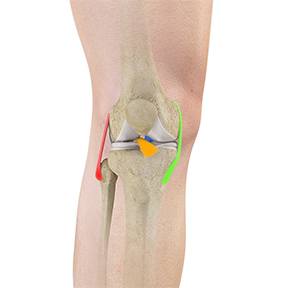
What is Knee Ligament Reconstruction?
Knee ligament reconstruction is a surgical procedure to repair or replace damaged ligaments of the knee joint. The surgery can be performed using minimally invasive techniques.
What are the Indications for Knee Ligament Reconstruction?
Knee ligament reconstruction is usually indicated in cases of high-energy knee injuries where a knee ligament is torn or avulsed such as:
- Motor vehicle accidents
- A direct blow to the knee
- Falling on the knee from a height
- High-impact sports injuries
What are the Symptoms of Knee Ligament Injuries?
Patients with knee ligament injuries may experience:
- Pain
- Swelling
- Limited range of motion
- Injuries to nerves and arteries of the leg
- Knee instability
How are Knee Ligament Injuries Diagnosed?
To accurately detect the location and extent of the tear, the following diagnostic procedures may be performed:
- Comprehensive clinical evaluation of the knee
- Imaging studies such as X-rays and MRI scans
- Arthroscopic examination
What is the Procedure for Knee Ligament Reconstruction?
The procedure is usually performed under general anesthesia.
Arthroscopic instruments are inserted through tiny keyhole incisions made over the knee to reattach the ligament to the bone using special sutures.
The ligament may also be reconstructed using a graft taken from the patient (autograft) or donor tissue (allograft).
Your surgeon will create a tunnel in the thighbone and shinbone through which the graft is inserted to replace the torn ligament.
After the graft is placed, fixation devices are used to secure the grafts and hold the ligaments in place while healing occurs.
What Does Postoperative Care for Knee Ligament Reconstruction Involve?
Following the surgery, you will be given pain medication to keep you comfortable.
Physical therapy will be recommended for the restoration of normal knee motion and muscle strength after surgery. You will be required to use crutches and a knee brace for 6 to 8 weeks with minimal or no weight-bearing during this time.
What are the Risks and Complications of Knee Ligament Reconstruction?
As with any surgery, there are risks and complications that may occur following knee ligament reconstruction. These can include:
- Complications of the anesthesia
- Bleeding
- Infection
- Vascular or nerve injury
- DVT or deep vein thrombosis (blood clot)
- Failure of the reconstruction
Why Choose Dr. Leah Brown for Knee Ligament Reconstruction in San Antonio
- Fellowship-Trained Sports Medicine Specialist
- Specialized Knee Ligament Care
- Individualized Treatment Planning
- Sports Medicine Experience
- Focus on Recovery and Return to Activity
Knee Ligament Reconstruction FAQs
What is knee ligament reconstruction?
Knee ligament reconstruction is a surgical procedure used to restore stability after a significant ligament injury. Depending on the injury, the damaged ligament may be reconstructed using a graft from the patient's own body or donor tissue.
Which knee ligaments can require reconstruction?
The knee contains several major ligaments, including the anterior cruciate ligament (ACL), posterior cruciate ligament (PCL), medial collateral ligament (MCL), and lateral collateral ligament (LCL). The appropriate treatment depends on which ligament is injured and the extent of the damage.
What causes knee ligament injuries?
Knee ligament injuries can occur during sports, motor vehicle accidents, falls, direct impacts, or other traumatic events. Sports that involve pivoting, sudden changes in direction, jumping, or contact can place significant stress on the knee ligaments.
What are the symptoms of a knee ligament injury?
Symptoms may include knee pain, swelling, limited range of motion, instability, and difficulty putting weight on the affected leg. Some severe injuries may also involve damage to surrounding nerves or blood vessels.
How is a knee ligament injury diagnosed?
Diagnosis generally begins with a medical history and physical examination. Depending on the injury, your orthopaedic surgeon may recommend X-rays, MRI imaging, or other diagnostic studies to evaluate the bones and soft tissues of the knee.
When is knee ligament reconstruction recommended?
Reconstruction may be considered when a ligament is significantly damaged and the knee remains unstable or when the injury and patient's activity goals make surgical treatment appropriate. The decision depends on the specific ligament injury and individual circumstances.
What is an autograft?
An autograft is tissue taken from another area of the patient's own body and used to reconstruct the injured ligament. The appropriate graft source depends on the specific procedure and patient.
What is an allograft?
An allograft is donor tissue used to reconstruct a damaged ligament. Your orthopaedic surgeon can discuss the potential advantages, limitations, and suitability of different graft options for your injury.
Is knee ligament reconstruction performed arthroscopically?
Many knee ligament reconstruction procedures use arthroscopic techniques. Small incisions allow specialized instruments and a camera to be inserted into the knee while the surgeon reconstructs the damaged ligament.
How long does recovery take after knee ligament reconstruction?
Recovery varies depending on the ligament injured, reconstruction technique, additional procedures, and individual healing. Rehabilitation commonly includes physical therapy to restore range of motion, strength, balance, and knee stability.
When can I return to sports after knee ligament reconstruction?
Return to sports should occur gradually and according to your surgeon's and physical therapist's recommendations. Timing depends on healing, strength, stability, range of motion, rehabilitation progress, and the demands of the sport.
What are the risks of knee ligament reconstruction?
Potential complications include infection, bleeding, blood clots, nerve or vascular injury, anesthesia-related complications, stiffness, and failure or reinjury of the reconstruction. Your surgeon will discuss the potential risks and benefits before surgery.
Where can I get knee ligament reconstruction in San Antonio, TX?
Leah Brown, MD provides specialized sports medicine and knee care in San Antonio, including evaluation and surgical treatment of appropriate knee ligament injuries.
Get Knee Ligament Reconstruction Care in San Antonio, TX
Leah Brown, MD provides specialized sports medicine and knee care for patients in San Antonio, TX, including evaluation and treatment of knee ligament injuries.
If a knee ligament injury is affecting your mobility, athletic performance, or daily activities, schedule an appointment with Dr. Leah Brown to discuss your diagnosis and treatment options.
For more information about our services or to schedule an appointment, call us at or cltextick here to request an appointment online. We’ll respond to you as soon as possible.