
Biceps Tendon Repair in San Antonio, TX
Dr. Brown, is a board-certified, fellowship-trained orthopaedic surgeon specializing in sports medicine and the surgical treatment of shoulder and elbow conditions. Her San Antonio practice specifically offers biceps tendon repair, as well as elbow ligament and tendon repair. Biceps tendon injuries can occur at different locations, including near the shoulder or at the elbow. Treatment depends on the location and severity of the tear, the patient's symptoms, activity level, and functional goals. When surgical repair is appropriate, the torn tendon is reattached to bone using an appropriate fixation technique, followed by a structured rehabilitation program.
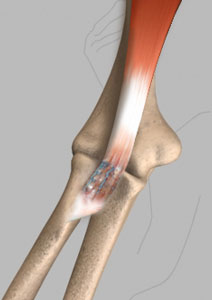
The biceps muscle is located in front of your upper arm. It helps in bending your elbow as well as in rotational movements of your forearm. Also, it helps to maintain stability in the shoulder joint. The biceps muscle has two tendons, one of which attaches it to the bone in the shoulder and the other attaches at the elbow. The biceps tendon at the elbow is called the distal biceps tendon and if there is a tear in this tendon, you will be unable to move your arm from the palm-down to palm-up position. Once the distal biceps tendon is torn, it cannot regrow back to the bone and heal by itself. Permanent weakness during rotatory movements of the forearm may occur if the tendon is not repaired surgically.
There are several procedures to accomplish reattachment of the distal biceps tendon to the forearm bone. Some techniques require two incisions while in others one incision may be sufficient. In some cases, the tendon is reattached using stitches passed through holes drilled in the bone. Sometimes, a small metal implant may be used to attach the tendon.
Surgical technique
During distal biceps tendon repair, your surgeon makes a small incision over the upper forearm, where the biceps muscle attaches to the radius bone. The torn biceps tendon is brought up through the incision. Then, the radius bone is prepared for tendon reattachment and to promote healing. Two suture anchors will be inserted into the bone. These serve as anchorage for the tendon. The sutures from the suture anchors are passed through the tendon in a particular interlocking manner so as to ensure a strong tendon repair.
After the surgery
After the repair is complete, a hinged elbow brace will be applied with your elbow bent at 90 degrees. The brace will be removed after 6 weeks and it may take up to 6months -1 year to regain full strength.
Risks and Complications
Complications are rare and may include numbness and weakness in the forearm, formation of new bone, limited movement, and re-tearing may occur.
Why Choose Dr. Leah Brown for Biceps Tendon Repair in San Antonio?
- Board-certified, fellowship-trained orthopaedic surgeon: Dr. Brown is fellowship trained in orthopaedic sports medicine with specialized training in shoulder and elbow surgery.
- Specialized shoulder and elbow care: Her practice focuses on sports medicine and surgical treatment of the shoulder and elbow.
- Biceps tendon repair: Biceps tendon repair is specifically listed among Dr. Brown's surgical services.
- Individualized treatment planning: The appropriate treatment depends on the location and extent of the tendon injury, symptoms, functional limitations, and individual goals.
- Sports medicine experience: Dr. Brown has fellowship training in sports medicine and shoulder and elbow care and has worked with professional and collegiate athletic programs.
- Comprehensive tendon care: Her practice also provides treatment for other shoulder, elbow, ligament, and tendon conditions.
- San Antonio orthopaedic care: Dr. Brown provides shoulder and elbow care through her San Antonio practice and UT Health San Antonio.
Biceps Tendon Repair FAQs
What is a biceps tendon tear?
A biceps tendon tear occurs when one of the tendons connecting the biceps muscle to bone is partially or completely torn. Tears can occur near the shoulder or near the elbow and may cause pain, weakness, bruising, or changes in the appearance of the muscle.
What causes a biceps tendon tear?
Biceps tendon tears may occur from a sudden force, lifting a heavy object, sports activities, or degenerative changes in the tendon. The mechanism and location of the injury can influence treatment.
What are the symptoms of a distal biceps tendon tear?
A distal biceps tendon tear near the elbow may cause sudden pain, bruising, weakness when bending the elbow, and reduced strength when rotating the forearm from palm-down to palm-up.
Does every biceps tendon tear require surgery?
No. Treatment depends on the location and severity of the tear, the patient's symptoms, activity level, and functional needs. Some injuries may be managed without surgery, while surgical repair may be considered for selected tears.
When is biceps tendon repair recommended?
Surgical repair may be considered when a tendon tear causes substantial weakness or functional limitations and the injury is appropriate for repair. An orthopaedic evaluation is necessary to determine whether surgery is appropriate.
How is a biceps tendon tear diagnosed?
Diagnosis typically involves a medical history and physical examination. Your physician may assess strength, range of motion, and the appearance and integrity of the tendon. Imaging such as ultrasound or MRI may be used when additional information is needed.
What happens during biceps tendon repair?
During surgery, the torn tendon is identified and prepared for reattachment. The surgeon then secures the tendon to the appropriate bone using a fixation method selected for the particular injury.
What is recovery like after biceps tendon repair?
Recovery involves protecting the repair while the tendon heals, followed by a gradual rehabilitation program. A brace or other protection may initially be used, with physical therapy progressing through range-of-motion and strengthening exercises according to the surgical plan.
When can I return to sports after biceps tendon repair?
Return to sports varies based on the location and severity of the tear, the type of repair, healing, rehabilitation progress, and the demands of the activity. High-load lifting and sports should be resumed gradually after appropriate recovery.
What are the potential risks of biceps tendon repair?
As with other surgical procedures, possible complications can include infection, nerve or blood-vessel injury, stiffness, weakness, re-tearing, or problems related to healing. Your surgeon can discuss procedure-specific risks before treatment.
When should I see an orthopaedic specialist for a biceps injury?
An evaluation is appropriate after sudden upper-arm or elbow pain, bruising, noticeable weakness, a popping sensation, or difficulty bending the elbow or rotating the forearm following an injury.
Schedule a Biceps Tendon Repair Consultation in San Antonio, TX
Dr. Leah Brown, MD, provides specialized sports medicine, shoulder, and elbow care in San Antonio, including biceps tendon repair. Her treatment approach is tailored to the specific injury, functional needs, and recovery goals of each patient.
If you have persistent pain, weakness, bruising, or suspected biceps tendon damage, schedule a biceps tendon evaluation with Dr. Leah Brown in San Antonio, TX.
For more information about our services or to schedule an appointment, call us at or cltextick here to request an appointment online. We’ll respond to you as soon as possible.